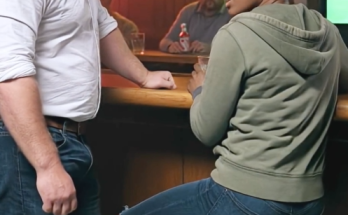
Part 1 — Seat 3A
The first thing ten-year-old Amani Barrett noticed was not the man sitting in her seat.
It was the way everyone else suddenly became interested in looking somewhere else.
A newspaper lifted. A phone came out. A businessman adjusted headphones he had already adjusted twice. Across the aisle, a silver-haired woman stared determinedly through the airplane window even though the aircraft was still parked at the gate.
Amani stood in the first-class aisle of Flight 417 with a shiny pink backpack hanging from one hand and her boarding pass held carefully in the other.
Seat 3A.
Window.
Her seat.
And a heavyset man in a black polo shirt was occupying it as though he had been born there.
Amani looked up at Lorraine Parker, her nanny, who had cared for her since she was four.
Lorraine gave her a reassuring nod.
“Go ahead, sweetheart.”
Amani stepped closer.
“Excuse me, sir.”
The man kept reading.
Amani tried again.
“Excuse me. I think that’s my seat.”
The newspaper lowered.
The man was perhaps fifty-five, with thinning sandy hair, pale blue eyes, and cheeks already reddened by irritation. His expression was not confused. That was the part Lorraine noticed immediately.
He knew.
He looked at Amani’s lavender hoodie, the beads in her braids, the pink backpack, and finally the boarding pass in her hand.
Then he smiled.
Not kindly.
“I think you’ve made a mistake, little girl.”
Amani glanced down at the ticket.
“No, sir. It says three A.”
“I heard you.”
He lifted the newspaper again.
Lorraine stepped forward.
“Sir, she’s assigned to this seat.”
He didn’t look at her.
“I’m comfortable.”
Lorraine blinked.
“I’m sorry?”
The newspaper lowered again.
“I said I’m comfortable.”
Two rows away, someone stopped talking.
Lorraine held out Amani’s pass.
“If you show us your boarding pass, I’m sure we can clear this up quickly.”
The man gave a dismissive wave.
“There’s nothing to clear up. Why don’t you take her to the back? Kids are fine anywhere.”
Amani’s smile disappeared.
Lorraine felt something cold move through her chest.
Not anger yet.
Something more controlled.
The instinct of an adult who had been entrusted with somebody precious.
“This is not about where children are fine,” Lorraine said. “It’s about the seat assigned to her.”
The man leaned back.
“You people really want to make a scene over a window?”
Lorraine’s eyes narrowed.
“What do you mean, ‘you people’?”
He smirked.
“People who think every little inconvenience is an injustice.”
Amani looked from one adult to the other.
Her father, Marcus Barrett, had taught her that rules were useful because they made things fair when people disagreed. He had explained it during chess lessons, during basketball games, even once when she complained about bedtime.
Rules mattered most, he had said, when following them was inconvenient.
So the problem seemed simple.
The man was in the wrong seat.
The adults would check.
He would move.
Except he didn’t.
“Why are you being mean?” Amani asked.
The question landed harder than Lorraine’s anger.
The man’s smirk faltered.
Only briefly.
Then he folded his arms.
“I’m not being mean. I’m being practical. First class is wasted on children. She’ll be perfectly comfortable in coach.”
Lorraine stared at him.
“You don’t get to decide what she deserves.”
“I paid good money to be here.”
“So did she.”
He laughed.
A low, ugly sound.
“She did?”
Lorraine understood exactly what he meant.
Before she could answer, a flight attendant approached.
Her auburn hair was pinned into a neat bun, and her name tag read KIMBERLY SHAW.
“Good afternoon,” she said. “Is there a problem?”
“Yes,” Lorraine said. “My ward has seat 3A. This gentleman refuses to move.”
Kimberly turned toward the man.
“Sir, may I see your boarding pass?”
He sighed theatrically.
“We’ve already been through this.”
“No, sir. You’ve been through this with the passenger. I’m asking as a member of the flight crew.”
His face tightened.
“Are you threatening me?”
“I’m verifying your assigned seat.”
Passengers were openly watching now.
A young man across the aisle held his phone low against his thigh, camera pointed toward the confrontation.
Amani noticed.
She hated it.
Being stared at felt almost worse than losing the seat.
Kimberly extended her hand.
“Boarding pass, please.”
For several long seconds, the man did nothing.
Then he dug into his pocket and slapped the paper into Kimberly’s palm.
She read it.
Her expression changed.
“Mr. Whitford.”
He looked away.
“Your assigned seat is 8C.”
A murmur spread through the cabin.
Gerald Whitford’s face reddened.
“There must be an error.”
Kimberly checked again.
“There isn’t.”
“I was told three A.”
“Your pass says eight C.”
“Then the system is wrong.”
“The system printed the ticket you handed me.”
A few passengers laughed quietly.
Gerald heard them.
His jaw hardened.
“I am not moving.”
Lorraine almost couldn’t believe it.
“Everyone can see the ticket.”
“I don’t care what everyone can see.”
Amani stood very still.
There was something frightening about an adult who had been proven wrong and became angrier because of it.
Kimberly touched the call panel.
A male flight attendant came forward.
Derrick Cole was broad-shouldered, calm, and older than Kimberly by perhaps ten years.
“What’s going on?”
Kimberly handed him the pass.
“Passenger in 3A is assigned to 8C and refuses to relocate.”
Derrick looked at Gerald.
“Sir, we cannot close the cabin until everyone is in an assigned seat.”
Gerald scoffed.
“So now I’m holding up the plane?”
“Yes.”
“Oh, I’m the problem?”
Derrick’s expression remained calm.
“Yes, sir.”
The cabin went completely silent.
Gerald jabbed a finger toward Amani.
“Not the little princess standing here demanding special treatment?”
Amani recoiled as though he had shouted directly into her ear.
Lorraine moved between them.
“She is not asking for special treatment.”
Gerald stood.
For the first time, everyone realized how large he was.
He towered over Amani and leaned toward Lorraine.
“She wants a seat.”
“Her seat.”
“She wants everyone inconvenienced because she didn’t get what she wanted.”
“No,” Derrick said. “Everyone is being inconvenienced because you refuse to sit in 8C.”
Gerald turned on him.
“You know who I am?”
Derrick paused.
“No.”
Gerald smiled.
That strange confidence returned.
“You might want to find out.”
And for the first time since the confrontation began, Lorraine saw something other than arrogance in his face.
Fear.
It vanished almost instantly.
But she had seen it.
And it made no sense at all.
Part 2 — The Man Who Would Not Move
The captain delayed departure.
Ten minutes became fifteen.
The jet bridge remained attached.
Ground personnel waited outside while passengers whispered and checked their watches.
Gerald Whitford still refused to leave seat 3A.
A supervisor named Evelyn Ross boarded the aircraft.
She listened to Kimberly, examined both boarding passes, and then crouched slightly so she was eye level with Amani.
“Hi. I’m Evelyn.”
“Amani.”
“I’m sorry this happened.”
Amani nodded.
“Can I ask you to wait just a little longer?”
“Okay.”
“You’re doing very well.”
Amani looked toward Gerald.
“I shouldn’t have to be doing well.”
Evelyn froze.
Lorraine almost smiled.
There was Marcus Barrett in that sentence.
Not the billionaire Marcus Barrett whom newspapers liked to photograph standing beside factories and politicians.
Her father.
The man who taught his daughter that politeness did not require surrender.
Evelyn straightened.
“Mr. Whitford, this is your final request from airline staff. Please move to seat 8C.”
Gerald stared out the window.
“No.”
“Then you’ll be removed from the aircraft.”
Something tightened around his eyes.
“Call whoever you need.”
“Sir—”
“I said call them.”
Evelyn studied him.
Then she signaled toward the front.
Two airport security officers boarded.
The mood changed instantly.
Phones rose higher.
Gerald saw them.
His breathing became shallow.
Lorraine noticed.
Again, the fear.
Not fear of embarrassment.
Not fear of being arrested.
Something specific.
Something he was waiting for.
One security officer stopped beside him.
“Mr. Whitford, we need you to come with us.”
“No.”
“Sir.”
“I bought a ticket.”
“And you’re refusing a lawful instruction from the flight crew.”
Gerald pointed toward Amani.
“She should never have been assigned this seat.”
The entire cabin seemed to inhale.
Lorraine stepped forward.
“Why?”
Gerald looked directly at Amani.
For the first time, his expression was not smug.
It was desperate.
“She just shouldn’t.”
Amani’s lower lip trembled.
Lorraine wrapped an arm around her.
“What does that mean?”
Gerald shook his head.
“Nothing.”
“Then move.”
“I can’t.”
The words were almost whispered.
Evelyn frowned.
“You can’t?”
Gerald seemed to realize what he had said.
He hardened again.
“I won’t.”
The security officer reached toward his arm.
Gerald jerked away.
“Don’t touch me.”
“Mr. Whitford—”
“Check the seat.”
Everyone stared.
The officer hesitated.
“What?”
Gerald swallowed.
“Check the seat.”
Derrick looked at Kimberly.
Evelyn stepped closer.
“What are you talking about?”
Gerald said nothing.
The captain’s voice came through the intercom.
“Ladies and gentlemen, we apologize for the delay. Please remain seated while our crew resolves a passenger issue.”
Amani looked up at Lorraine.
“Why does he keep looking at my chair?”
Lorraine felt the hairs rise on her arms.
Because Amani was right.
Gerald was not looking at the aisle.
Or security.
Or the door.
His eyes kept returning to one place.
The seam between the seat cushion and the wall beside 3A.
Evelyn noticed too.
“Mr. Whitford.”
He closed his eyes.
“Please.”
It was the first polite word he had spoken.
“Please what?”
He looked at Amani again.
And Lorraine saw shame.
Not irritation.
Shame.
“Take the girl off the plane.”
The cabin erupted.
“What?”
“Are you insane?”
A woman behind Lorraine said, “Somebody remove him!”
Gerald slammed his fist against the armrest.
“GET HER OFF THIS AIRCRAFT!”
Amani flinched.
Lorraine pulled her close.
The security officers seized Gerald by both arms.
He struggled.
“No! You don’t understand!”
“Stop resisting.”
“Check the seat!”
Derrick moved between Gerald and Amani.
“What is in the seat?”
Gerald stopped fighting.
His face had gone gray.
“I don’t know.”
Nobody spoke.
Evelyn whispered, “What do you mean you don’t know?”
Gerald’s eyes filled with tears.
“I was told to make sure she never sat there.”
The silence that followed was absolute.
Amani stared at him.
Lorraine felt her heartbeat in her throat.
“Who told you?”
Gerald shook his head.
“I can’t.”
One officer tightened his grip.
“You’re going to tell us.”
Gerald looked toward the front door as though expecting someone to appear.
Then his gaze returned to Amani.
“I’m sorry.”
Lorraine’s voice shook with fury.
“You humiliated a child in front of an entire airplane.”
“I know.”
“You insulted her.”
“I know.”
“You said she belonged in the back.”
His face crumpled.
“I needed everyone to believe I was just an arrogant idiot.”
No one moved.
Gerald looked at the seat.
“Because if they knew why I was really sitting there, they’d know I’d failed.”
Part 3 — What Was Under 3A
Flight 417 was evacuated.
Passengers were escorted back into the terminal while airport police, security personnel, and airline managers flooded the gate.
Rumors spread instantly.
A bomb.
A weapon.
A threat against a passenger.
Lorraine sat with Amani inside a private airline office.
Amani had stopped speaking.
That frightened Lorraine more than tears would have.
She sat beside her, hands folded around the pink backpack.
Finally Lorraine said, “You can cry.”
“I know.”
“You can be angry.”
“I know.”
“You don’t have to understand everything right now.”
Amani stared at the carpet.
“Was he trying to save me?”
Lorraine did not know how to answer.
“I don’t know.”
“Then why was he so horrible?”
“Maybe because he thought being horrible was the only way to make you leave.”
“That doesn’t make it okay.”
“No.”
Lorraine took her hand.
“It doesn’t.”
Amani leaned against her.
“My dad says sometimes people do the wrong thing for the right reason and it’s still wrong.”
Lorraine smiled faintly.
“Your dad says a lot.”
“He talks a lot.”
That earned the smallest laugh.
Twenty minutes later, Marcus Barrett arrived.
He did not arrive with lawyers.
He did not arrive with assistants.
He arrived alone.
A tall Black man in his late forties, Marcus had built Barrett Infrastructure from two used trucks and a rented storage unit into one of the largest privately held logistics companies in Texas.
But when he entered the office and saw Amani, none of that mattered.
He crossed the room in three strides.
“Baby.”
Amani ran to him.
Marcus dropped to his knees and held her.
“Dad.”
“I’m here.”
“They wouldn’t let me sit down.”
“I know.”
“And the man was mean.”
“I know.”
“And then he said somebody told him to keep me out of the seat.”
Marcus went perfectly still.
Lorraine saw it.
“Marcus?”
He slowly pulled back.
“What exactly did he say?”
Lorraine repeated everything.
Marcus listened without interrupting.
Then his expression changed.
Not fear.
Recognition.
“Where is Whitford?”
Lorraine stared.
“You know him?”
Marcus stood.
“Where is he?”
A security supervisor appeared in the doorway.
“Mr. Barrett?”
“Yes.”
“There’s something you need to see.”
They were taken to a secure conference room overlooking the runway.
On the table sat a clear evidence bag.
Inside was a small black electronic device.
Marcus stared at it.
“What is that?”
The supervisor said, “It was taped underneath the side panel beside seat 3A.”
Lorraine covered her mouth.
Amani whispered, “Was it a bomb?”
“No,” Marcus said immediately.
The supervisor nodded.
“Not an explosive. Preliminary assessment suggests a tracking and recording device. It appears capable of capturing audio and transmitting location data.”
Marcus’s face hardened.
“Who installed it?”
“We don’t know.”
“And Whitford?”
“He refuses to identify who contacted him.”
Marcus looked through the glass toward the aircraft.
“Why would someone track my daughter?”
Nobody answered.
Then a detective entered.
“Mr. Barrett, there’s another issue.”
He placed a photograph on the table.
It showed Gerald Whitford thirty years younger.
Beside him stood another man.
Marcus.
Amani looked at her father.
“You know him.”
Marcus stared at the photograph for a long time.
“Yes.”
Lorraine whispered, “Who is he?”
Marcus sat down.
“Gerald Whitford was one of the first people who ever worked for me.”
The room went quiet.
“When I started Barrett Hauling, I had two trucks. One barely ran. Gerald drove the other. We worked sixteen-hour days. Slept in motels when we could afford them and truck cabs when we couldn’t.”
“What happened?” Lorraine asked.
Marcus looked exhausted.
“Fifteen years ago, I fired him.”
“Why?”
“He was accused of stealing company fuel cards and selling route information to competitors.”
“Did he?”
Marcus hesitated.
“I believed he did.”
Amani looked confused.
“Did you know for sure?”
Marcus stared at his daughter.
“No.”
The detective spoke.
“Mr. Whitford claims he was framed.”
Marcus’s jaw tightened.
“Of course he does.”
“He also claims the same person who framed him contacted him yesterday.”
Marcus turned.
“What person?”
“He won’t say.”
“Why?”
The detective looked toward Amani.
“Because he says that person knows where his granddaughter lives.”
Lorraine closed her eyes.
The picture had changed again.
Gerald was still cruel.
Still wrong.
But now there was terror behind the cruelty.
Marcus stood.
“I want to speak with him.”
Gerald sat handcuffed inside an airport interview room.
When Marcus entered, he laughed bitterly.
“Well.”
Marcus closed the door.
“Who put the device under my daughter’s seat?”
Gerald looked down.
“You haven’t changed.”
“What does that mean?”
“You still skip the part where you ask if I’m okay.”
“You terrified my child.”
Gerald looked up.
“And I kept her out of that seat.”
“By humiliating her?”
“I had twelve minutes.”
“You could have warned the crew.”
“No.”
“Why?”
“Because the message said if I spoke to security, they’d hurt Rebecca.”
Marcus stared at him.
“Your granddaughter?”
Gerald nodded.
“My daughter died three years ago. Rebecca’s all I have.”
Marcus sat opposite him.
“Start at the beginning.”
Gerald rubbed his wrists against the cuffs.
“Yesterday morning I got a package. No return address. Inside was five thousand dollars, your daughter’s flight number, seat assignment, and a photograph of Rebecca walking into school.”
Marcus’s fists tightened.
“The instructions?”
“Board the flight. Sit in 3A. Make sure Amani doesn’t sit there. Don’t explain why. Don’t alert anyone. Once the plane reaches cruising altitude, move to my assigned seat.”
Marcus frowned.
“Why?”
“I didn’t know.”
“You didn’t check the seat?”
“I tried. There were too many people around during boarding.”
“So you decided to behave like a racist bully.”
Gerald flinched.
“I decided to make everyone focus on me.”
Marcus leaned closer.
“You told my daughter she belonged in the back.”
“I know.”
“You made her feel small.”
“I know.”
“You think protecting her body gives you the right to damage everything else?”
Gerald’s eyes burned.
“No.”
For several seconds, neither man spoke.
Then Gerald whispered, “I knew exactly how ugly I had to be to make the scene believable.”
Marcus stared at him.
“That came easily.”
Gerald laughed without humor.
“You want the truth?”
“Yes.”
“I learned it from watching men like the ones you became partners with.”
Marcus sat back.
“What is that supposed to mean?”
“The person who framed me fifteen years ago didn’t want route information.”
Gerald leaned forward.
“He wanted access to you.”
Marcus’s face changed.
“Who?”
Gerald shook his head.
“If I say it, Rebecca dies.”
Marcus stood.
“If you don’t, someone may come after Amani again.”
Gerald closed his eyes.
Then he said four words.
“Look at your board.”
Part 4 — The Man Marcus Trusted
Barrett Infrastructure had seven board members.
Marcus trusted six of them.
He trusted one completely.
Daniel Cross.
Daniel had been Marcus’s attorney when the company was still small enough to share office space with a tire warehouse. He had negotiated Marcus’s first major contract, defended him through lawsuits, and stood beside him at his wife Camille’s funeral eight years earlier.
He was Amani’s godfather.
When Marcus explained what Gerald had said, Lorraine’s first reaction was disbelief.
“Daniel?”
Marcus said nothing.
“You’re serious?”
“I don’t know.”
Amani sat across the room coloring on hotel stationery the airline had given her.
Marcus lowered his voice.
“Gerald said to look at the board.”
“That could mean anyone.”
“Yes.”
“Then why Daniel?”
Marcus stared at the tracking device inside the evidence bag.
“Because Daniel is the only board member who knew Amani’s seat number.”
Lorraine felt cold.
“How?”
“He booked the flight.”
Amani looked up.
“Uncle Daniel booked it because you forgot.”
Marcus swallowed.
“I remember.”
There were other details.
Small things.
Daniel had insisted Amani fly that afternoon instead of the next morning because Marcus’s plane was undergoing maintenance.
Daniel had suggested first class.
Daniel had chosen 3A because, he said, Amani loved window seats.
Police brought Gerald into another interview.
This time Marcus carried his phone.
He placed a photograph of Daniel Cross on the table.
Gerald went pale.
Marcus knew.
“Say it.”
Gerald shook his head.
“Gerald.”
“I can’t.”
Marcus slammed his palm on the table.
“My daughter was targeted!”
Gerald’s eyes flashed.
“And my granddaughter still is!”
The detective leaned forward.
“We have officers at her school and home.”
“You think that matters?”
“Yes.”
“You don’t know Daniel.”
The name slipped out.
Gerald froze.
Marcus whispered, “Daniel.”
Gerald looked like a man who had finally stepped off a cliff.
“He framed me.”
“Why?”
“Because I saw something.”
“What?”
Gerald looked at Marcus.
“Your wife.”
Marcus stopped breathing.
“What did you say?”
Gerald’s voice softened.
“Camille.”
Marcus’s chair scraped backward.
“Don’t.”
“Marcus—”
“Do not use her name.”
Gerald stared at him with unbearable sadness.
“I saw Daniel with her the night before her accident.”
Marcus felt the room tilt.
Camille Barrett had died when her SUV crossed the median on a rain-slick highway outside Austin.
The police ruled it an accident.
Marcus had spent eight years believing that.
Gerald continued.
“They were arguing outside the old distribution office. Camille was crying. Daniel grabbed her arm. I stepped toward them and he let go.”
Marcus could barely speak.
“What were they arguing about?”
“I didn’t hear all of it.”
“What did you hear?”
Gerald looked at him.
“Camille said, ‘Marcus has a right to know who Amani’s father is.’”
Marcus did not move.
The detective stopped writing.
Outside the interview room, Lorraine instinctively looked toward Amani.
Gerald’s voice dropped.
“Daniel saw me.”
Marcus stared at him.
“No.”
“Two days later, fuel cards were found in my locker. Route documents were found in my truck.”
“No.”
“You fired me.”
“No.”
“A week later Camille died.”
Marcus stood so quickly the chair overturned.
“You’re lying.”
“I wish I were.”
“Amani is my daughter.”
“I never said she wasn’t.”
“You just—”
“I’m telling you what Camille said.”
Marcus grabbed the edge of the table.
Gerald continued quietly.
“After she died, Daniel came to me. He said if I ever repeated what I’d heard, he’d make sure I went to prison. I had a wife, a daughter, a mortgage. I was already ruined. So I disappeared.”
Marcus’s eyes filled with rage.
“And now?”
“Now he needed me because he knew I still hated you.”
Marcus flinched.
Gerald laughed bitterly.
“He thought I’d enjoy humiliating your daughter.”
“Did you?”
“No.”
The answer came instantly.
“I hated you for fifteen years, Marcus. But the second I saw Amani standing there with that stupid pink backpack, all I could see was my granddaughter.”
Marcus sat down again.
“What was the device for?”
Gerald shook his head.
“I don’t know.”
A detective entered quickly.
“We may.”
He placed a laptop on the table.
A technical specialist had traced the device’s transmission protocol.
It was not only a tracker.
It was designed to activate when the aircraft left the ground.
The device would then transmit Amani’s real-time location and record conversations around her.
But there was something stranger.
It had been paired to another receiver.
A receiver found forty minutes earlier.
Inside Daniel Cross’s car.
Police arrested him at Barrett Infrastructure headquarters.
Marcus demanded to confront him.
The detective refused.
Then Daniel asked to see Marcus.
The two men sat separated by glass.
Daniel looked tired but remarkably calm.
Marcus picked up the telephone.
“You tried to track my daughter.”
Daniel picked up his receiver.
“No.”
“The device was linked to your car.”
“Yes.”
“Gerald named you.”
“Yes.”
“You framed him.”
“Yes.”
“You threatened his granddaughter.”
Daniel’s expression changed.
“No.”
Marcus froze.
“What?”
“I never threatened Rebecca.”
“Don’t lie to me.”
“I did terrible things, Marcus. But I did not threaten that child.”
“Then who did?”
Daniel leaned closer to the glass.
“That’s what you need to understand.”
Marcus felt something cold move through him.
“The device under 3A wasn’t mine.”
“But the receiver—”
“Was planted.”
“You expect me to believe that?”
“No. I expect you to remember who taught you never to accept the first explanation that fits.”
Marcus stared at the man he had trusted for half his life.
Daniel whispered, “I framed Gerald fifteen years ago.”
Marcus’s throat tightened.
“Why?”
“To protect Camille.”
“From what?”
Daniel closed his eyes.
“From you.”
Marcus stood.
The chair nearly toppled.
Daniel continued before he could speak.
“You were building the company. You were gone constantly. Camille discovered financial transfers tied to one of your early investors.”
“What investor?”
Daniel opened his eyes.
“Richard Barrett.”
Marcus’s father.
A man who had supposedly died twelve years earlier.
Marcus slowly sat again.
Daniel’s next words barely made a sound.
“Your father is alive.”
Part 5 — The Seat Was Never About Amani
Marcus had buried Richard Barrett.
He remembered the coffin.
The rain.
The flag folded beside the grave because Richard had served four years in the Army before Marcus was born.
He remembered standing beside Camille while dirt struck the casket lid.
“You’re lying.”
Daniel shook his head.
“The coffin was empty.”
Marcus could hear his own breathing.
“Why?”
“Because Richard had been laundering money through your company’s earliest contracts.”
“No.”
“Camille found the records.”
“No.”
“She came to me because she was afraid you’d protect him.”
“I hated my father.”
“You wanted his approval.”
Marcus looked away.
Daniel’s voice softened.
“Those are not the same thing.”
The detective outside the glass watched carefully.
Marcus forced himself to continue.
“What does this have to do with Amani?”
Daniel looked terrified for the first time.
“Everything.”
Richard Barrett had not died.
He had disappeared.
Camille and Daniel had discovered the truth after Richard staged his death to avoid a federal investigation.
Camille wanted to tell Marcus.
Daniel convinced her to wait until they had proof.
The argument Gerald witnessed outside the warehouse had not been an affair.
It had been Camille accusing Daniel of cowardice.
“Marcus has a right to know who Amani’s father is.”
Gerald had heard the sentence correctly.
He had misunderstood the meaning.
Marcus was not the father Camille meant.
Richard was.
Not biologically.
Financially.
Legally.
Amani had been born shortly before Richard vanished, and months earlier Richard had quietly created a trust in her name containing ownership shares purchased with laundered funds.
Amani, without anyone realizing it, legally controlled assets worth hundreds of millions of dollars.
When Camille discovered the trust, she wanted it dissolved and reported.
Before she could act, she died.
Marcus stared at Daniel through the glass.
“You said you protected her.”
“I tried.”
“She died.”
“Yes.”
“Was it an accident?”
Daniel lowered his head.
“No.”
Marcus stopped breathing.
“Did you kill her?”
Daniel looked up.
“No.”
“Did my father?”
Daniel nodded.
For eight years Marcus had mourned an accident.
For eight years Amani had carried photographs of her mother to school on family-history days.
For eight years Marcus had visited a grave belonging to a father who had arranged the death of his wife.
His hands began shaking.
“Where is Richard?”
Daniel whispered, “I don’t know.”
The detective entered the room immediately.
“Mr. Barrett.”
Marcus barely heard him.
“We have a situation.”
“What?”
“Gerald Whitford’s granddaughter was never at school today.”
Gerald, in the neighboring interview room, heard.
He began shouting.
“No!”
Police had verified the school records.
Rebecca Whitford had been absent.
Security footage from her neighborhood showed her entering a dark SUV that morning.
Voluntarily.
She was sixteen.
The vehicle registration led to a shell company.
A shell company owned by Barrett Holdings.
Not Marcus’s Barrett Infrastructure.
Richard Barrett’s old corporation.
Gerald broke down.
“He has her.”
Then Amani entered the hallway.
Lorraine was behind her.
“Amani, stay back,” Marcus said.
But Amani was staring at Gerald.
“Mr. Whitford?”
Gerald lifted his head.
Tears covered his face.
“I’m sorry, sweetheart.”
Amani stood quietly.
“You were scared for Rebecca.”
“Yes.”
“That’s why you took my seat?”
“Yes.”
She thought about it.
“You were still mean.”
A broken laugh escaped him.
“Yes.”
“You could have told me.”
“No.”
“Why?”
“Because sometimes grown-ups convince themselves that hurting somebody a little is acceptable if they think it prevents something worse.”
Amani looked at her father.
Marcus felt the words cut into him.
She turned back to Gerald.
“My dad says that’s how bad decisions become habits.”
Gerald nodded.
“Your dad is right.”
Daniel, watching from the other room, suddenly stood.
His face drained of color.
He pointed through the glass.
“At her backpack.”
Marcus turned.
Amani’s shiny pink backpack sat on the chair behind her.
“What?”
Daniel shouted through the glass.
“The backpack!”
Officers rushed forward.
Lorraine pulled Amani back.
A technician opened the bag.
Inside the front pocket, beneath a pack of colored pencils, was another device.
Smaller than the one found beneath seat 3A.
Marcus stared at it.
“How long has she had that backpack?”
Lorraine answered.
“Three weeks.”
“Who gave it to her?”
Amani frowned.
“Grandpa.”
Everyone froze.
Marcus turned slowly.
“What did you say?”
Amani looked confused.
“Grandpa gave it to me.”
Marcus felt his blood turn cold.
“My father is dead.”
“No.”
Amani’s face crumpled.
“The old man at the math competition.”
Lorraine looked horrified.
“What old man?”
“The one who said he knew Dad when Dad was little.”
Marcus knelt in front of her.
“When?”
“Three weeks ago.”
“Why didn’t you tell me?”
“I did.”
“No, you didn’t.”
“I sent you a picture.”
Marcus pulled out his phone.
Hundreds of messages.
Work.
Meetings.
Contracts.
Amani took the phone.
She scrolled.
And there it was.
Three weeks earlier.
A photograph Marcus had never opened.
Amani smiling beside an elderly man in a baseball cap.
Marcus nearly dropped the phone.
Richard Barrett.
Older.
Thinner.
Alive.
The caption beneath the picture read:
Dad, I met someone who says he used to know you. He gave me a backpack!
Marcus closed his eyes.
He had been in a board meeting when the message arrived.
He remembered seeing the notification.
He had thought he would open it later.
Later had become never.
His father had stood beside his daughter.
Touched her.
Given her a tracking device.
And Marcus had not noticed.
He pulled Amani into his arms.
“I’m sorry.”
She held him.
“For what?”
“For being too busy.”
“You always come home.”
“Coming home isn’t the same as being present.”
For the first time that day, Marcus cried.
Police traced the second device.
Unlike the one under seat 3A, it was actively transmitting.
Officers followed the signal to a private hangar outside Dallas.
There they found Richard Barrett.
Alive.
Beside him sat Rebecca Whitford.
Unharmed.
And furious.
She had not been kidnapped.
She had gone willingly.
Richard had contacted her months earlier and told her what had happened to her grandfather.
She had agreed to help him expose Marcus.
But Richard had lied to her too.
He told Rebecca the tracker would record evidence of Marcus mistreating Gerald.
Instead, Richard intended to use Amani’s location and recorded conversations to gain access to legal passwords connected to the trust Camille had discovered years earlier.
He needed Amani alive.
He needed her close.
And he needed Marcus distracted.
The confrontation over seat 3A had been engineered.
Gerald had been manipulated into creating a scene.
Daniel had been framed with the receiver.
Rebecca had been manipulated with the truth about her grandfather.
And Richard had expected everyone’s anger to point in different directions while he quietly regained control of the fortune hidden in Amani’s name.
There was only one thing he had not anticipated.
A ten-year-old child refusing to surrender her seat.
If Amani had simply gone to coach, Gerald would never have been challenged.
His boarding pass would never have been checked.
Security would never have been called.
The device beneath 3A would have activated in flight.
Daniel would have been blamed.
And Richard might have disappeared again.
But Amani had stood there with her boarding pass and said five simple words.
That is my seat, sir.
The entire scheme collapsed because a child refused to let an adult convince her that what belonged to her did not.
Three months later, Gerald Whitford stood outside Barrett Infrastructure headquarters.
He wore a new suit that fit badly and looked uncomfortable.
Marcus came through the glass doors.
Gerald smiled nervously.
“Feels strange being here.”
“It should.”
“You sure about this?”
“No.”
Gerald laughed.
Marcus handed him a folder.
Inside was a formal apology clearing Gerald of the theft accusations from fifteen years earlier.
There was also an offer.
Director of Ethics and Internal Compliance.
Gerald stared at it.
“You’re kidding.”
“No.”
“You want the man who hijacked your daughter’s seat overseeing ethics?”
“I want the man who knows exactly what happens when fear makes people compromise their values.”
Gerald looked down.
“I said terrible things to her.”
“Yes.”
“I can’t take them back.”
“No.”
“She forgive me?”
Marcus smiled faintly.
“You’ll have to ask her.”
The doors opened.
Amani came running out wearing the same lavender hoodie.
Gerald stiffened.
She stopped in front of him.
For several seconds, neither spoke.
Then Gerald said, “I owe you an apology.”
“A big one.”
“A very big one.”
“You were rude.”
“Yes.”
“Arrogant.”
“Yes.”
“Mean.”
“Yes.”
“You embarrassed me.”
Gerald swallowed.
“Yes.”
Amani folded her arms.
“And you took my window seat.”
“That may have been the worst part.”
She tried not to smile.
Gerald crouched slightly.
“I thought protecting someone meant I could choose who else got hurt. I was wrong.”
Amani studied him.
“My mom used to say being scared explains things. It doesn’t excuse them.”
Gerald’s eyes filled.
“She sounds smart.”
“She was.”
He nodded.
“I’m sorry, Amani.”
She extended her hand.
“I forgive you.”
Gerald took it carefully.
“But,” she added, “if we ever fly together, you sit in the seat on your ticket.”
Marcus laughed.
Gerald wiped his eyes.
“Yes, ma’am.”
Amani walked inside.
Gerald watched her go.
“You know the strangest part?”
Marcus looked at him.
“What?”
“I spent fifteen years thinking you ruined my life.”
Marcus said nothing.
Gerald continued.
“Then your daughter saved it.”
Marcus looked through the glass doors.
Amani was laughing with Lorraine inside the lobby.
“No,” Marcus said quietly.
“She saved mine too.”
That afternoon, Marcus drove Amani to the cemetery.
They stopped at Camille’s grave.
Amani placed flowers beside the stone.
“Dad?”
“Yes?”
“Do you think Mom knew what would happen?”
“No.”
“Do you think she was scared?”
Marcus looked at his wife’s name carved into granite.
“Yes.”
Amani slipped her hand into his.
“Was she brave?”
Marcus squeezed her fingers.
“The bravest person I ever knew.”
Amani thought about that.
Then she said, “Maybe brave doesn’t mean you aren’t scared.”
“No.”
“What does it mean?”
Marcus looked down at his daughter.
“It means you know what belongs to you, what you believe is right, and what you refuse to surrender—even when someone bigger tells you to move.”
Amani smiled.
“Like seat 3A.”
Marcus laughed through tears.
“Exactly like seat 3A.”
They stood there together while the Texas wind moved through the oak trees.
Months earlier, Marcus would have described that day at the airport as the worst travel nightmare of his life.
Now he understood differently.
A stolen seat had uncovered a fifteen-year betrayal.
An arrogant man had turned out to be a frightened grandfather.
A trusted friend had turned out to be both guilty and loyal.
A dead man had turned out to be alive.
And a ten-year-old girl, simply by refusing to accept something she knew was wrong, had pulled apart a conspiracy built by adults who had spent years convincing themselves that truth was too dangerous to face.
Marcus looked at Amani.
She was reading the inscription on her mother’s stone.
He suddenly remembered something Camille used to say whenever he became too obsessed with winning.
Power makes people loud, Marcus.
Truth doesn’t have to be.
Sometimes it only has to stand there long enough.
Amani turned toward him.
“Ready?”
Marcus nodded.
“Ready.”
They walked back toward the car hand in hand.
And somewhere behind them, carved into stone and carried on the wind, Camille Barrett’s memory remained exactly where the lies had never been able to reach it.
The truth had not arrived with detectives.
It had not arrived through wealth, influence, lawyers, or power.
It had begun with a little girl holding a boarding pass in both hands and quietly telling a grown man the one thing he never expected her to say.
“No, sir.
That seat is mine.”