PART ONE — SEAT 2A
By the time the security officer ordered me off the airplane, I had already begun to suspect that the problem was not where I was sitting.
The problem was that someone knew exactly who I was.
That realization came quietly, not dramatically. It settled into my stomach while the engines of Flight 417 hummed beneath the floor and Washington disappeared behind a curtain of cold March rain.
I was fifty-two years old, old enough to understand that humiliation rarely announces itself honestly.
It disguises itself as procedure.
“Sir, grab your bag,” the officer said.
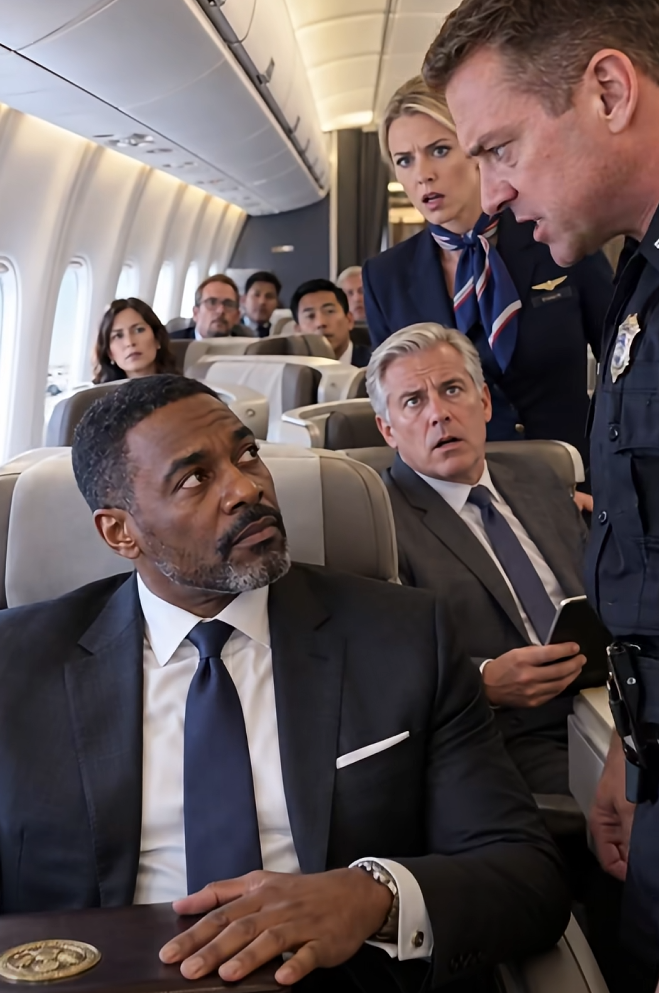
He stood beside Seat 2A with one hand resting near his belt. Behind him, flight attendant Claire Bennett wore the rigid expression of a woman trying very hard to appear certain.
Every passenger in first class was watching us while pretending not to.
Only fifteen minutes earlier, I had been staring through the window at the gray ramp outside Reagan National Airport, thinking about my daughter.
Danielle had called that morning.
“You sound tired, Dad.”
“I am tired.”
“That isn’t what I asked.”
I smiled despite myself.
At thirty, Danielle had inherited her mother’s irritating ability to hear things people were trying not to say.
“I’m fine.”
“You’re working too much.”
“That accusation has been made before.”
“By Mom.”
“Frequently.”
There had been a pause.
We still did that whenever Ellen came up.
My wife had been gone six years, but grief had never entirely left the room. It had simply learned better manners.
Danielle finally said, “Promise me you’ll actually sleep tonight.”
“I promise.”
“You’re lying.”
“Probably.”
She laughed.
That laugh stayed with me as I boarded.
Less than twenty-four hours earlier, I had been inside a secured Senate conference room helping finalize legal language for an aviation oversight package that had taken nearly two years to negotiate.
The legislation involved federal subsidies, passenger protections, emergency maintenance reporting, airline consolidation, and one provision that several major carriers absolutely hated.
It required airlines receiving federal assistance to disclose internal records concerning involuntary passenger removals.
Every one of them.
Not just the convenient ones.
Not just cases that reached the news.
Everything.
I had spent most of my professional life learning how institutions concealed wrongdoing without technically lying.
They buried truth in process.
They renamed retaliation as policy.
They called discrimination discretion.
And when all else failed, they blamed a system that nobody seemed responsible for operating.
That morning, however, I was simply another passenger.
Dark charcoal suit.
Navy tie.
Old leather briefcase.
Seat 2A.
I had been seated for perhaps four minutes when Claire approached.
She was somewhere in her late thirties, with blonde hair pinned neatly behind her head and the professional smile of someone trained to remain pleasant during chaos.
“Sir, may I see your boarding pass?”
I showed her my phone.
She studied it.
Then she asked to see it again.
“Is there a problem?”
“There seems to be a discrepancy.”
“What kind?”
“With the manifest.”
I glanced toward Seat 2B.
The businessman beside me had boarded shortly after I did.
Silver hair.
Gray suit.
Expensive watch.
He had barely acknowledged me when he sat down.
Now he was looking at his tablet.
Claire continued.
“I need to verify that you are actually ticketed for first class.”
Actually.
It was one word.
People sometimes imagine prejudice arrives loudly.
Often it does not.
Sometimes it arrives wearing a uniform and speaking politely.
I held up my phone.
“Seat 2A. Group 1. Ticket scanned at the gate.”
She glanced at it.
“Sir, I’ll need you to gather your belongings and step into the galley.”
“Why?”
“I just explained there is a discrepancy.”
“No. You told me there is one. You have not explained what it is.”
Her smile tightened.
“Sir, please cooperate.”
“I am cooperating. I’m asking you to tell me why a valid passenger needs to leave his assigned seat.”
People began listening.
That changed everything.
Claire lowered her voice.
“You are creating a scene.”
I almost laughed.
I had not raised my voice.
I had not stood.
I had not touched anyone.
But somehow the scene belonged to me.
“I’m sitting in my assigned seat.”
“If you refuse instructions, I can have you removed.”
That sentence carried something different.
Not irritation.
Expectation.
As if she already knew what would happen.
She walked toward the front galley.
The man in Seat 2B shifted beside me.
“You know,” he murmured, “sometimes it’s easier just to cooperate.”
I turned to him.
He looked familiar.
Not enough that I could place him.
Maybe from television.
Maybe from a hearing.
Maybe nowhere.
“I am cooperating,” I said.
He gave a faint shrug.
“Doesn’t look like it.”
Ten minutes later, airport security boarded.
The lead officer stopped beside me.
“Sir, grab your bag.”
Claire stood behind him.
And for just half a second, she smiled.
It was small.
Almost invisible.
But I saw it.
I reached toward my briefcase.
The officer instantly stiffened.
“Step away from the bag!”
Several passengers inhaled sharply.
I froze.
Then I raised both hands.
“There are government documents inside.”
“Step away.”
“Officer, I am going to open the case slowly.”
“You are not authorized—”
“I need identification.”
That gave him pause.
I released the brass clasp.
The click sounded strangely loud.
Inside were briefing folders, two legal pads, a sealed document envelope, and a metal-and-leather credential wallet.
I removed the wallet.
Placed it on the tray table.
Opened it.
The gold seal caught the overhead light.
UNITED STATES SENATE.
The officer stared.
“My name is Marcus Vance,” I said. “I am Chief Legal Advisor to the Chairman of the Senate Commerce Committee.”
The businessman beside me lowered his tablet.
Claire went pale.
I continued.
“The committee responsible for aviation oversight.”
The officer swallowed.
His hand dropped away from his belt.
“I—”
“And before anyone makes another decision,” I said, “I suggest someone explain what discrepancy required two security officers to board this airplane.”
Nobody answered.
The ventilation system whispered above us.
Rain streaked the windows.
Finally, Claire spoke.
“It came from the passenger service system.”
“What came from it?”
“A notification.”
“What notification?”
Her eyes flicked toward Seat 2B.
Only for a fraction of a second.
But I saw that too.
And suddenly the man beside me was no longer looking at his tablet.
He was looking directly at me.
That was when I understood.
This had never been about Seat 2A.
PART TWO — THE NAME IN THE SYSTEM
The captain came out of the cockpit three minutes later.
Captain Raymond Holloway was sixty if he was a day, with silver hair and the measured movements of a man who had spent four decades making decisions other people depended upon.
“What’s going on?”
Nobody seemed eager to answer.
I closed my credential case.
Claire stared at the floor.
The security officer cleared his throat.
“There was a request to remove this passenger.”
“From whom?”
“Airline operations.”
The captain frowned.
“Reason?”
The officer looked toward Claire.
She said, “Manifest irregularity.”
I asked, “Does a manifest irregularity normally result in security?”
“No,” Captain Holloway said immediately.
Claire looked at him.
He looked back.
Something passed between them.
Not familiarity.
Concern.
The businessman in 2B finally spoke.
“This is becoming ridiculous. We have schedules.”
His voice irritated me more than it should have.
Captain Holloway turned.
“Sir, I’ll handle the aircraft.”
“I’m simply pointing out that one passenger is delaying everyone.”
I looked at him.
“What is your name?”
He smiled faintly.
“Why does that matter?”
“You’ve commented on this situation twice.”
“I’m sitting beside it.”
“Then telling me your name should be easy.”
The smile vanished.
For the first time, he seemed uncomfortable.
“Peter Lang.”
Something moved in my memory.
Not recognition.
A shadow of it.
Claire interrupted.
“Captain, perhaps Mr. Vance can come forward while this gets sorted out.”
“No,” I said.
Everyone looked at me.
“If there is a valid safety issue, explain it. If there isn’t, I’m remaining in my assigned seat.”
The captain nodded once.
“That’s reasonable.”
Claire’s face changed.
“You can’t just—”
“Claire.”
He did not raise his voice.
She stopped.
“I want to see the alert.”
She hesitated.
“Now.”
Claire took out a company device.
Her hands trembled as she opened the passenger record.
The captain read over her shoulder.
His brow furrowed.
“What does Executive Review mean?”
Claire said nothing.
My pulse quickened.
“May I see that?”
“No,” she replied immediately.
The captain looked at her.
“Why?”
“It contains internal information.”
I almost smiled.
“So do half the documents in my briefcase.”
Captain Holloway held out his hand.
“Give me the device.”
She obeyed.
He read silently.
Then he looked at me.
“Mr. Vance, there is a note attached to your reservation.”
“What does it say?”
He hesitated.
“Potential document security concern. Verify identity before departure. If passenger declines secondary review, escalate to airport security.”
I stared at him.
“Who entered it?”
“There’s an authorization code.”
“What code?”
He read it.
“EX-7.”
Peter Lang shifted beside me.
That movement answered the question before anyone else did.
Claire saw me notice.
So did the captain.
“What is EX-7?” I asked.
Claire whispered, “Executive authorization.”
The cabin seemed to shrink.
Captain Holloway said, “Who has access?”
“Senior corporate security.”
“Anyone else?”
She hesitated.
“Certain executive officers.”
My eyes moved toward Peter Lang.
He gave a humorless laugh.
“This is absurd.”
“Is it?”
“You’re implying I have something to do with an airline security code because I moved in my seat?”
“No. I’m asking why a first-class passenger traveling from Washington had an executive-level intervention placed on his reservation.”
“I wouldn’t know.”
The officer who had ordered me off the aircraft was now visibly uncomfortable.
“Sir,” he said quietly, “we were told you had refused identity verification.”
“I showed my boarding pass.”
“We weren’t told that.”
“Were you told I had made threats?”
“No.”
“Touched anyone?”
“No.”
“Raised my voice?”
He shook his head.
“Then you were sent to remove a seated passenger because an airline employee requested it.”
He looked ashamed.
“Yes.”
I knew enough not to turn him into the villain.
Systems survive by convincing the lowest person in the chain that responsibility lives somewhere else.
I asked Captain Holloway, “Can the person who entered the note be identified?”
Claire answered before he could.
“No.”
Too quickly.
Everyone heard it.
The captain turned slowly.
“You seem very certain.”
“I mean—not here.”
“Claire.”
Her face had become gray.
“I’m sorry.”
“For what?”
She looked at me.
And for the first time since she approached my seat, I saw fear rather than authority.
Real fear.
“Mr. Vance,” she said, “I need to speak with you privately.”
Peter Lang stood.
“No.”
It was the first command he had given.
And it was a mistake.
The captain blocked the aisle.
“Sit down.”
Lang stared at him.
“You don’t know what you’re interfering with.”
Captain Holloway’s expression hardened.
“I know you are a passenger on my aircraft.”
Lang’s jaw tightened.
Then he sat.
Claire leaned closer to me.
“Please.”
Something in her eyes told me this was no longer about pride.
I stood.
The security officer stepped aside.
As I followed Claire toward the galley, I looked back once.
Peter Lang was no longer annoyed.
He was scared.
PART THREE — THE WOMAN EVERYONE BLAMED
The front galley was barely large enough for two people.
Claire pulled the curtain.
Her hands were shaking.
“Before I say anything, I need you to understand something.”
“I’m listening.”
“I didn’t enter the alert.”
“I assumed that.”
“I also didn’t request security because of your boarding pass.”
That surprised me.
“You pointed them toward me.”
“Yes.”
“You told them I was refusing instructions.”
“Yes.”
“And you threatened to remove me.”
“Yes.”
She swallowed.
“I did those things because I was told to.”
“By whom?”
Tears appeared in her eyes.
“Not Peter Lang.”
My instincts warned me not to rush.
“Who is he?”
“You really don’t recognize him?”
“No.”
“His legal name is Peter Langford.”
That did it.
Langford.
I knew the name.
Everybody involved in aviation policy did.
Arthur Langford had founded Meridian Atlantic Airlines thirty-eight years earlier.
His son, Peter, had served as executive vice president until a scandal involving maintenance reporting forced him out of public view.
Officially, Peter Langford had resigned.
Unofficially, rumors said he still controlled enormous influence through a family trust.
I pulled the galley curtain aside slightly and looked toward Seat 2B.
He was speaking quietly into his phone.
“Why is Peter Langford traveling under Peter Lang?”
“He does it often.”
“How do you know?”
Claire wiped beneath one eye.
“Because I’ve been documenting it for eleven months.”
That sentence changed everything.
“Documenting what?”
She stared at me.
Then reached inside her uniform pocket.
She removed a folded piece of paper.
No phone.
No digital record.
Paper.
On it were dates.
Flight numbers.
Passenger names.
Employee numbers.
Codes.
EX-7 appeared repeatedly.
“What is this?”
“A removal list.”
My skin went cold.
She continued.
“Meridian has an internal program. They call it Passenger Integrity Review.”
“I’ve never heard of it.”
“You’re not supposed to.”
“What does it do?”
“It flags passengers.”
“For what?”
“Complaints. Litigation. Regulatory activity. Employees who speak to journalists. Passengers who file certain kinds of claims. Federal inspectors.”
I stared at her.
“That would be illegal.”
“I know.”
“Why would an airline flag federal regulators?”
“To know when they’re traveling. Who they’re sitting near. Whether they’re carrying company-related material.”
My eyes moved instinctively toward the curtain.
My briefcase.
The confidential briefing notes.
Claire saw the movement.
“That’s why they wanted you in the galley.”
“Why?”
“So someone could access the bag.”
A chill climbed the back of my neck.
“Who?”
“I don’t know.”
“You expect me to believe that?”
“I only know what happens at the crew level.”
I folded the paper.
“Then why participate?”
Pain crossed her face.
“My husband died three years ago.”
I said nothing.
“He was a Meridian mechanic.”
Her voice cracked.
“Daniel Bennett. Baltimore maintenance division.”
The name was familiar.
I searched my memory.
Then found it.
“Hangar 14.”
Claire stared at me.
“You remember?”
“Yes.”
Three years earlier, a hydraulic failure had injured two workers during an overnight maintenance operation.
One man later died.
Daniel Bennett.
The company described it as an isolated workplace accident.
Claire said, “Daniel had been reporting falsified maintenance records for months.”
My breath slowed.
“He told me supervisors were signing inspections that never happened. He kept copies.”
“What happened to them?”
“They disappeared from our house after he died.”
“Did you report that?”
“To the company.”
I almost asked why.
Her bitter laugh answered me.
“I know.”
“What happened?”
“They offered me a settlement.”
“You accepted?”
“I had two children. A mortgage. Funeral bills.”
There was no judgment I could give her that life had not already given more harshly.
“So you became a flight attendant?”
“I already was one.”
She looked toward the cabin.
“Six months after Daniel died, I saw an internal code beside a passenger name. EX-7. Two days later, that passenger was removed from a flight after being accused of threatening a crew member.”
“Did he?”
“No.”
“How do you know?”
“I was there.”
My stomach tightened.
“I started writing down every EX-7 I saw.”
“How many?”
“Forty-three.”
“Forty-three passengers?”
She shook her head.
“Forty-three incidents I personally witnessed. There are probably hundreds.”
“Why target me?”
“I don’t know.”
“But you knew I was flagged.”
“Yes.”
“And you still participated.”
Her face crumpled.
“Because they were watching me too.”
That silenced me.
“Who?”
She nodded toward the cabin.
“Peter.”
“You said he didn’t order this.”
“He didn’t. He was here to make sure it happened.”
“Who ordered it?”
She whispered a name.
I thought I had misheard.
“What?”
“Your chairman.”
I stared at her.
“The Chairman of the Senate Commerce Committee?”
“Yes.”
“Senator Robert Hale?”
She nodded.
For several seconds, I said nothing.
Robert Hale had been my friend for eighteen years.
He had attended Ellen’s funeral.
He had called Danielle on her graduation day.
He had personally recruited me from the Justice Department.
Yesterday, I had sat beside him as we finalized the aviation bill.
“That’s impossible.”
Claire reached inside her pocket again.
This time she handed me a small printed screenshot.
At the top was my passenger record.
Below it:
AUTHORIZATION SOURCE: RH-CHAIR.
I felt the floor move beneath me.
It had nothing to do with turbulence.
PART FOUR — THE MAN BEHIND THE BILL
I called Senator Hale from the galley.
He answered on the second ring.
“Marcus?”
His voice was warm.
Familiar.
“What’s wrong?”
For one dangerous moment, I wanted to believe Claire had fabricated everything.
“Are you alone?”
A pause.
“Yes.”
“Where are you?”
“My office.”
I closed my eyes.
“Did you place an executive review on my airline reservation?”
Silence.
Not confusion.
Silence.
That told me more than denial could have.
“Marcus,” he finally said, “where are you?”
“On the aircraft.”
“Have you taken off?”
“No.”
“Get off the plane.”
My blood turned cold.
“Why?”
“Just do what I’m telling you.”
I looked at Claire.
She was crying silently.
“You ordered it.”
“It is more complicated than that.”
“You flagged me through Meridian Atlantic.”
“Marcus—”
“You used a private airline security system to interfere with a member of Senate staff.”
“Lower your voice.”
That almost made me laugh.
“What exactly were they supposed to find in my briefcase?”
Another pause.
Then Hale sighed.
“You have the wrong briefing packet.”
I looked down the aisle.
My leather briefcase remained beside Seat 2A.
“What?”
“The documents you took last night were not supposed to leave the committee room.”
“They are my notes.”
“Some of them are not.”
I remembered the sealed envelope.
It had been sitting among the briefing materials when I packed up after midnight.
I assumed my deputy had added it.
“What is in the envelope?”
“Marcus, listen carefully. Take your briefcase. Leave the aircraft. A car will meet you.”
“Whose car?”
“Mine.”
“And then?”
“We solve this quietly.”
Eighteen years.
That was what betrayal sounded like.
Not shouting.
Not confession.
A friend asking you to make something disappear quietly.
“What’s in the envelope, Robert?”
His breathing changed.
“You don’t need to know.”
“I think I do.”
“Marcus.”
“Tell me.”
He said nothing.
So I ended the call.
Claire watched me.
“You believe me now.”
I wished I did not.
We returned to the cabin.
Peter Langford stood when he saw us.
“What did she tell you?”
I ignored him.
I opened my briefcase.
The security officer watched carefully but did not interfere.
I removed the sealed envelope.
It bore no classified marking.
No name.
Only a handwritten number.
731.
Peter Langford’s face changed.
There it was.
Recognition.
“What is 731?” I asked.
He sat down slowly.
Nobody answered.
I tore open the envelope.
Inside were photocopied financial records.
Payments.
Consulting contracts.
Political action committees.
Shell companies.
And a spreadsheet showing millions of dollars flowing from Meridian-linked organizations into nonprofits connected to several lawmakers.
One name appeared repeatedly.
Robert Hale.
The chairman whose aviation bill was supposedly about protecting passengers.
My chairman.
My friend.
But that was not the worst page.
The final document contained a list of proposed amendments.
I recognized nearly every one.
They were provisions Hale had personally insisted we add during closed negotiations.
Each amendment weakened reporting requirements in exactly the areas Meridian appeared most vulnerable.
I looked at Peter.
“You wrote this bill.”
His expression remained still.
“Parts of it.”
Claire covered her mouth.
The captain whispered something I could not hear.
I felt suddenly sick.
For two years, I had believed we were forcing the airline industry into transparency.
In reality, someone had been designing doors into the law.
And I had helped build them.
Peter spoke quietly.
“You should have gotten off the plane.”
“Why?”
“Because you were never supposed to open that envelope.”
“Who put it in my briefing packet?”
“I don’t know.”
“That is the first thing you’ve said today that I believe.”
His eyes hardened.
“You think this ends with Senator Hale?”
“What does that mean?”
Peter looked at Claire.
Then at me.
“Hale is frightened of Meridian.”
Claire stared.
“You’re lying.”
“I wish I were.”
I held up the financial records.
“He took your money.”
Peter gave a tired smile.
“No.”
“What?”
“He took someone’s money.”
“Those are Meridian-linked entities.”
“They look like Meridian-linked entities.”
The distinction mattered.
I had spent my life in law.
Language mattered most when people hoped you would stop listening.
“Whose entities?”
Peter leaned back.
“That’s what the envelope was supposed to make you ask.”
I stared at him.
“You knew it was there.”
“I knew something was.”
“So this whole operation was designed to recover it?”
“No.”
He looked toward the front galley.
“It was designed to make sure you opened it.”
Claire whispered, “What?”
Peter’s smile disappeared.
“Marcus, somebody wanted you angry.”
I felt every hair on my arms rise.
“Somebody wanted security on this aircraft. They wanted witnesses. They wanted Claire to overreact. They wanted you forced to identify yourself publicly.”
“Why?”
“So there would be a record of you discovering the documents under circumstances nobody could quietly erase.”
Claire shook her head.
“No. No, I was told to remove him.”
“Exactly.”
“By corporate security.”
Peter looked at her.
“Who told corporate security?”
She froze.
I thought of the screenshot.
RH-CHAIR.
Robert Hale.
But Hale had sounded terrified when I called.
Not afraid of exposure.
Afraid of something else.
My phone buzzed.
Danielle.
For an instant, relief touched me.
Then I saw the message.
DAD, DO NOT LEAVE THE AIRPORT.
Below it was another line.
THE WOMAN WHO GAVE YOU THE ENVELOPE IS WITH ME.
I stared at the screen.
My daughter was supposed to be in Boston.
I called her.
She answered immediately.
“Dad?”
“Where are you?”
“Reagan.”
My heart stopped.
“Why?”
“Because Mom told me to come.”
I could not speak.
Claire stared at me.
Peter Langford stared too.
I gripped the phone.
“Danielle.”
“I know how that sounds.”
“Your mother has been dead six years.”
“I know.”
“Then what did you just say?”
Her voice broke.
“Dad, there are things about Mom you never knew.”
PART FIVE — THE WOMAN WHO WAS SUPPOSED TO BE DEAD
I left the airplane voluntarily.
Not because Claire asked.
Not because security ordered me.
Because my dead wife had just entered the story.
The terminal outside Gate 32 seemed impossibly ordinary.
People bought coffee.
Children dragged backpacks.
A television played financial news without sound.
My life had split open, and a man twenty feet away was complaining about a delayed connection to Atlanta.
Danielle stood near the windows.
Beside her was an older woman wearing a camel-colored coat and dark glasses.
For half a second, my mind refused to recognize her.
The human brain is merciful that way.
It rejects impossible things before allowing them to hurt you.
Then the woman removed her glasses.
My knees nearly failed.
Ellen.
My wife.
The woman whose coffin I had touched before they lowered it into the ground.
Her hair was mostly gray now.
Her face thinner.
But it was Ellen.
I heard myself whisper her name.
She started crying.
“Marcus.”
I did not embrace her.
I could not.
I stepped backward.
“No.”
Danielle reached toward me.
“Dad—”
“No.”
Six years of grief rose inside me with nowhere to go.
I had slept on one side of the bed because turning toward hers hurt too much.
I had kept her winter coat in the hall closet for three years.
I had spoken to her photograph the night Danielle got engaged.
I had buried my wife.
“You’re dead.”
Ellen covered her mouth.
“I know what they told you.”
“What they told me?”
My voice echoed across the gate area.
People turned.
For once, I did not care.
“I identified your belongings.”
“The body was badly burned.”
“I buried you!”
Danielle was crying now.
“Dad, please.”
I looked at my daughter.
“You knew?”
“Since yesterday.”
That hurt almost as much.
Ellen said, “She found out because I contacted her.”
“Why now?”
“Because they were going to kill you.”
Everything stopped.
Even anger.
“What?”
She glanced around.
“We cannot talk here.”
“I’m not moving one inch until someone tells me what is happening.”
So Ellen did.
Six years earlier, she had worked as a forensic accountant for a consulting firm.
I knew that.
What I did not know was that Meridian Atlantic had been one of her clients.
She had discovered a hidden network of payments being routed through aviation contractors, nonprofit foundations, lobbying organizations, and political committees.
At first, she believed it was bribery.
Then she discovered something stranger.
The money was not primarily designed to purchase lawmakers.
It was designed to compromise them.
Small favors became undisclosed contributions.
Undisclosed contributions became leverage.
Leverage became votes.
When executives resisted, they too were compromised.
Peter Langford had been one of them.
His maintenance scandal had been real, but the evidence against him had been selectively released after he tried to shut down the network.
“Who runs it?” I asked.
Ellen looked at me.
“A company called Asterion Strategic Services.”
I knew the name.
Everyone in Washington did.
Defense consulting.
Political risk.
Government logistics.
They employed former regulators, former intelligence officers, former congressional staff.
“They don’t own Meridian,” Ellen said. “They don’t need to. They own vulnerabilities.”
“Robert Hale?”
“Compromised.”
“Peter?”
“Compromised.”
“Claire’s husband?”
Ellen’s face tightened.
“Daniel Bennett found falsified maintenance records that were being used to move money through repair contracts.”
Claire, who had followed us from the aircraft, made a broken sound behind me.
Ellen turned.
“You’re Claire?”
Claire nodded.
“I’m sorry.”
“Did they kill my husband?”
Ellen hesitated.
That was answer enough.
Claire’s legs gave way.
Captain Holloway caught her before she reached the floor.
I looked at Ellen.
“And your death?”
“Asterion arranged an accident.”
“You survived?”
“Yes.”
“Why didn’t you come home?”
Her eyes filled.
“Because they believed I died.”
“That does not answer me.”
“If I came home, they would have known.”
“You let Danielle and me bury you.”
“I watched the funeral from a surveillance feed.”
I recoiled as if she had struck me.
“Do not tell me that as if it makes this better.”
“It doesn’t.”
“You watched your daughter bury her mother?”
Ellen began sobbing.
“I thought staying dead was the only way to keep you alive.”
I turned away.
For a long time, nobody spoke.
Finally I asked, “Why the envelope?”
“I put it in your briefing materials.”
“You were inside the Capitol?”
“No. Someone helped me.”
“Who?”
She looked toward Peter Langford.
He shook his head.
“Not me.”
Ellen said, “Robert.”
I stared.
“Senator Hale?”
“He has been trying to get out for years.”
The call suddenly made sense.
Get off the plane.
A car will meet you.
He was not trying to recover the evidence for himself.
He was trying to remove me before something worse happened.
“Then why flag my reservation?”
“He didn’t.”
Claire pulled out the screenshot.
“RH-CHAIR.”
Ellen examined it.
Then gave a sad smile.
“That doesn’t stand for Robert Hale, Chairman.”
“What does it stand for?”
She looked directly at me.
“Recovery Hold — Chairperson.”
I felt foolish and terrified at once.
“Chairperson of what?”
“Asterion’s aviation control group.”
“Who is that?”
Nobody answered.
Then Danielle spoke.
“Dad.”
Her voice was almost inaudible.
I turned.
She was staring toward the airplane.
Through the terminal windows we could see baggage crews moving below.
A black government sedan had pulled onto the service road near the aircraft.
A man stepped out.
Tall.
White hair.
Dark overcoat.
Even at a distance, I recognized him.
Senator Robert Hale.
He entered the terminal through a restricted door several minutes later.
When he reached us, he looked twenty years older than he had the previous night.
Then he saw Ellen.
His face crumpled.
“My God.”
She said, “Hello, Robert.”
He looked at me.
“Marcus, we have very little time.”
“For what?”
“They know the documents are exposed.”
“Who?”
Hale looked at Danielle.
Then Ellen.
Finally, he said, “Your committee chairman is not the person you should be afraid of.”
“I’ve gathered that.”
“The person running Asterion’s aviation network has been close to you for years.”
A terrible silence followed.
I looked at Ellen.
Then Danielle.
Then Peter.
Then Hale.
“Who?”
Ellen began to cry again.
Not from fear.
From shame.
And suddenly I understood before she spoke.
I stepped backward.
“No.”
“Marcus—”
“No.”
Danielle whispered, “Mom, tell him.”
Ellen closed her eyes.
“I wasn’t hiding from Asterion.”
My heart hammered.
“What?”
“For the first two years, yes. But after that…”
She could barely continue.
“After that, I was working for them.”
Claire stared at her.
Peter swore under his breath.
I felt nothing.
Not yet.
Shock is sometimes an empty room.
“You joined them?”
“They found me.”
“You said they thought you were dead.”
“They did. Until I contacted the wrong person.”
“And then?”
“They gave me a choice.”
“There is always a choice.”
“I know.”
Her tears fell.
“I made the wrong one.”
Hale said quietly, “Ellen became their financial director.”
Danielle gasped.
She had not known that part.
I stared at my wife.
The woman I had mourned.
The woman I had loved since we were twenty-seven.
“The money?”
“I moved it.”
“The lawmakers?”
“I built the channels.”
“The airline?”
“I designed the executive review system.”
Claire lunged toward her.
“You did this?”
Captain Holloway held Claire back.
“My husband is dead because of you!”
Ellen did not defend herself.
“Yes.”
Claire screamed.
The sound cut through the terminal.
People began filming.
Ellen looked at her.
“I did not order Daniel’s death. But the system I built identified him as a threat.”
Claire collapsed into tears.
I could barely breathe.
“So why come back?”
Ellen looked at me.
“Because they ordered your death this morning.”
My mouth went dry.
“What?”
“They discovered you had the envelope.”
“How?”
“Asterion monitors Meridian’s executive system.”
“Then the Seat 2A incident—”
“Was supposed to remove you from the aircraft.”
“Why?”
“So you could be transferred to a private security room.”
Claire stared.
“I was told he would just be questioned.”
“I know.”
Ellen’s expression broke.
“He was never supposed to come back out.”
The gold credential case suddenly felt very heavy in my pocket.
One stubborn decision had changed everything.
I had refused to leave Seat 2A.
I had refused to step quietly into the galley.
I had opened my credentials where dozens of witnesses could see them.
The humiliation I had resented had accidentally saved my life.
Hale said, “The moment you identified yourself publicly, with passengers recording, the plan became too risky.”
Peter nodded slowly.
“That’s why nobody came for the bag.”
I thought of Claire’s satisfied smile.
Not cruelty, I realized now.
Relief.
“You wanted security there.”
She wiped her face.
“I knew something was wrong. I thought if enough people were watching, whatever they planned couldn’t happen quietly.”
I looked at her.
“You could have told me.”
“They monitor crew communications.”
“So you humiliated me instead.”
“I’m sorry.”
It was not enough.
But sometimes apologies are not meant to erase damage.
They are simply the first honest thing left standing after a lie collapses.
Sirens sounded outside.
Hale looked toward the entrance.
“Federal agents.”
Peter stiffened.
“Whose?”
A woman in a dark blue suit entered the terminal with six agents behind her.
She approached us.
“Marcus Vance?”
“Yes.”
“I’m Deputy Director Helen Graves, FBI Public Corruption Unit.”
I looked at Hale.
He smiled weakly.
“I made one call before coming here.”
The agents moved toward Ellen.
Danielle grabbed her mother’s hand.
“Wait.”
Ellen pulled her close.
For six years, my daughter had dreamed of one more embrace with her mother.
Now she was receiving it while federal agents waited to place that mother in custody.
Life can be cruel in ways fiction would be ashamed to attempt.
Ellen kissed Danielle’s forehead.
“I’m sorry.”
Danielle sobbed.
“You should have come home.”
“I know.”
Then Ellen looked at me.
There were a thousand things between us.
Love.
Betrayal.
Marriage.
Death.
Six stolen years.
A corrupt system.
A coffin with the wrong woman inside it.
“I never stopped loving you,” she said.
I believed her.
That was the hardest part.
Love does not make people good.
It does not prevent cowardice.
It does not erase what they have done.
Sometimes love survives inside terrible people and makes the tragedy worse.
I said, “I wish you had loved us enough to come back before today.”
She lowered her head.
The agents took her.
Three months later, the story became public.
Asterion Strategic Services collapsed under federal indictments.
Four airline executives resigned.
Two senators were charged.
Senator Hale entered a cooperation agreement and announced he would not seek reelection.
Peter Langford testified for fourteen hours before Congress.
Claire Bennett testified too.
She brought her handwritten list of forty-three removals.
The list became the foundation of what journalists eventually called the Seat 2A Hearings.
Meridian Atlantic paid the largest passenger-rights settlement in American aviation history.
Daniel Bennett’s death was reopened as a federal homicide investigation.
Claire received the apology she deserved.
Not closure.
There is a difference.
As for me, I resigned from the committee.
People assumed it was because of Hale.
They were wrong.
I resigned because for years I had believed proximity to power meant I understood it.
Seat 2A taught me otherwise.
Power is often most dangerous when nobody sees it operating.
Six months after the flight, I was invited back to Reagan National for the signing of a new aviation accountability law.
Danielle came with me.
Afterward, we sat near the terminal windows drinking coffee.
She asked, “Do you ever think about Mom?”
“Every day.”
“Do you hate her?”
I considered that.
“No.”
“Do you forgive her?”
“Not yet.”
Danielle nodded.
She had learned, as I had, that forgiveness demanded more honesty than anger.
Our flight was called.
We boarded.
For reasons I still cannot explain, my ticket was Seat 2A.
I stood beside it for several seconds.
Danielle smiled.
“You okay?”
I looked at the window.
At the tray table.
At the aisle where a security officer had once ordered me to stand.
Then I sat down.
A flight attendant approached.
My body tightened automatically.
She smiled.
“Mr. Vance?”
“Yes?”
She handed me a small envelope.
My name was written across the front.
My hands went cold.
“Who gave you this?”
“A woman at the gate.”
“What woman?”
“She left before boarding.”
I opened it.
Inside was a single photograph.
It showed Ellen being escorted into federal custody six months earlier.
But the picture had been taken from above.
From somewhere inside the airport surveillance system.
On the back were seven handwritten words.
YOU EXPOSED THE NETWORK, NOT THE OWNER.
Beneath them was a symbol.
A small gold circle surrounding the number 731.
I stared at it.
Danielle whispered, “Dad?”
The cabin door closed.
My phone lost signal.
And somewhere beneath the noise of the engines, I realized the most frightening truth of all.
The people we had arrested were never the ones at the top.
They were only the passengers.
Someone else was still flying the plane.
“`