PART ONE — THE MAN IN SEAT 2B
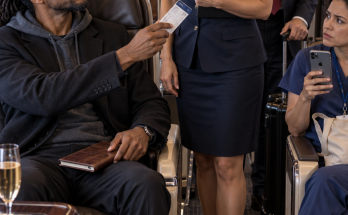
The champagne hit Marcus Vance in the face with the sharp, humiliating force of a slap.
For one suspended second, the entire first-class cabin seemed to lose its breath.
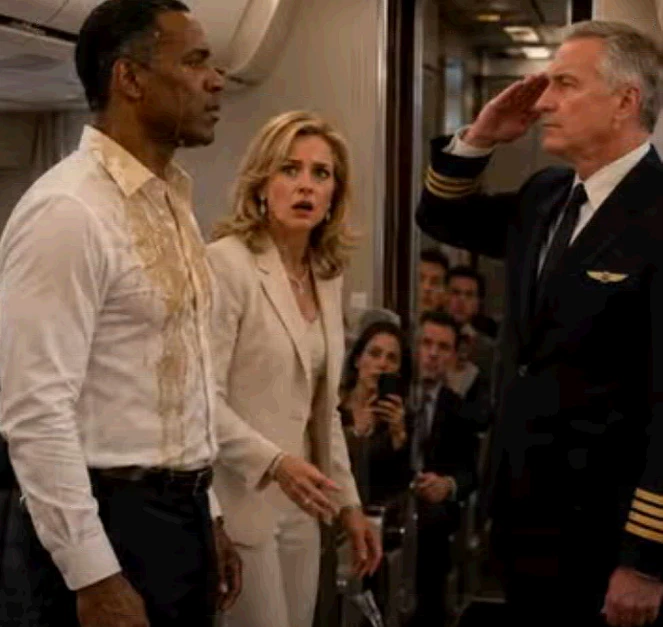
Golden liquid streamed down his forehead, traced the hard line of his cheek, soaked the collar of his white dress shirt, and disappeared beneath the fabric. The crystal glass struck the floor near his polished black shoes and broke into glittering fragments.
Nobody moved.
The silence afterward was almost unnatural.
Marcus remained seated.
That was what frightened Eleanor Sterling most.
He did not leap to his feet. He did not curse. He did not raise a hand. He did not even wipe the champagne from his face.
He simply turned toward her.
His eyes were calm.
Not empty.
Not defeated.
Calm.
Eleanor had spent most of her adult life around powerful men. She knew the difference between a weak man suppressing anger and a strong man deciding whether anger was useful.
Marcus Vance looked like the second kind.
Her fingers trembled around the broken stem still trapped in her hand.
“Some people,” she said loudly, desperate to regain control of the moment, “have absolutely no respect for boundaries.”
The words sounded absurd even to her.
Across the aisle, a gray-haired businessman slowly lowered his reading glasses.
Behind him, a woman held her phone chest-high, recording.
The senior flight attendant, Renee Alvarez, came quickly from the forward galley.
“Ma’am, please give me the glass.”
Eleanor ignored her.
Marcus looked at Renee.
“I would like to speak to the captain.”
His voice was quiet.
That made everyone listen harder.
Eleanor gave a brittle laugh.
“Oh, please. It was an accident.”
Marcus finally took a white linen napkin from the tray table.
He dabbed champagne from his eyes.
“Was it?”
Eleanor’s face tightened.
“You crowded me. You ignored me. You were rude.”
“I answered every question you were entitled to ask.”
“You deliberately provoked me.”
“No.”
That single word landed like a door closing.
Marcus set the napkin down.
“You mistook my refusal to submit to you for provocation.”
Several passengers shifted in their seats.
Eleanor felt the cabin turning against her.
She had known that sensation before.
In boardrooms.
At charity galas.
At dinner tables where old friends suddenly looked away.
She hated it.
“You don’t know who you’re speaking to,” she said.
Marcus’s expression barely changed.
“No, ma’am. I don’t.”
Then a man across the aisle whispered, “My God.”
His wife leaned toward him.
“What?”
The man stared at Marcus.
“That’s General Vance.”
The name passed through the cabin in murmurs.
Marcus heard it.
So did Eleanor.
Her eyes darted from face to face.
“General?”
The cockpit door opened.
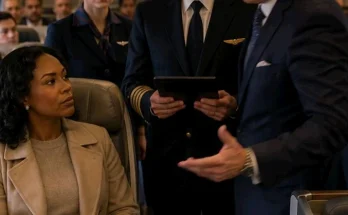
Captain Robert Hayes stepped into the aisle.
He had flown commercial aircraft for twenty-three years after serving as a Navy pilot, and there were very few things capable of breaking his professional expression.
Seeing Marcus Vance soaked in champagne was one of them.
Hayes stopped.
His eyes widened.
Then, instinctively, he straightened.
And saluted.
“General Vance.”
Marcus rose slowly.
He was taller than Eleanor had realized.
“Captain.”
Hayes lowered his hand.
“Sir, I had no idea you were aboard.”
“I prefer it that way.”
The captain looked at the champagne soaking Marcus’s shirt, then at the broken glass, then at Eleanor.
“What happened?”
Renee answered before Eleanor could.
“Passenger in 2A intentionally threw her drink at Mr. Vance after demanding he be removed from his assigned seat.”
“It slipped,” Eleanor said.
“No,” said a woman two rows back.
Everyone turned.
She held up her phone.
“I recorded it.”
Eleanor’s face went pale.
Marcus looked toward the phone, then away.
He seemed tired rather than triumphant.
That unsettled her more than anger would have.
Captain Hayes spoke carefully.
“Ms. Sterling, you will remain in your seat. Security will meet the aircraft when we arrive.”
“What?”
“You assaulted another passenger.”
“That is ridiculous.”
“It is also on video.”
Eleanor stared at Marcus.
“You’re going to have me arrested over champagne?”
Marcus met her eyes.
“No.”
Something in his answer surprised the whole cabin.
Even Captain Hayes.
Marcus continued.
“That decision belongs to the airline and law enforcement. Not me.”
He sat again.
For a moment, Eleanor almost felt relief.
Then Marcus picked up his book.
“But I suggest,” he said without looking at her, “that you spend the rest of this flight thinking about why you believed you had the right to do it.”
The cabin went quiet again.
Eleanor sat.
For the first time in years, she had nothing to say.
Four hours earlier, Marcus Vance had been standing alone in a hotel room, wondering whether his daughter would forgive him for all the years when duty had come before home.
At fifty-two, Marcus had received nearly every military honor a career officer could reasonably expect.
None of them mattered that morning.
He had retired from active service after twenty years of commanding units whose work would never appear fully in newspapers.
He had given orders in rooms without windows.
He had called families with news that changed lives forever.
He had held dying men by the hand.
He had missed holidays.
Missed birthdays.
Missed his daughter Chloe’s first school play.
And, worst of all, missed the last hours of his wife Anna’s life.
That memory had shaped every year afterward.
Anna had died after a sudden aneurysm.
Marcus had been overseas.
Chloe was nineteen.
By the time he landed, Anna was gone.
Chloe had been sitting alone beside the hospital bed.
She never blamed him directly.
That was worse.
The years since had been polite, loving, strained.
Marcus called.
Chloe answered.
They spoke about weather, work, books, ordinary things.
Anything except the one truth neither knew how to touch.
You were not there.
Today was Chloe’s graduate-school commencement in Seattle.
Marcus had promised he would sit in the audience.
No uniform.
No aides.
No speeches.
Just her father.
The ticket agent had noticed the worn bronze military coin he carried whenever he was nervous.
“My brother had one like that,” she said.
Marcus looked up.
“Army?”
“Marines.”
She smiled sadly.
“He didn’t come home.”
“I’m sorry.”
She studied Marcus’s ticket.
Then typed something.
“You’ve been upgraded.”
“That’s not necessary.”
“I know.”
Marcus had smiled.
“Thank you.”
Seat 2B.
Beside Eleanor Sterling.
He had no idea that one seat would place two people at the exact intersection of their worst days.
PART TWO — ELEANOR’S COLLAPSING WORLD
Eleanor had boarded the aircraft believing humiliation was something that happened to other people.
That belief had protected her for thirty years.
She had been raised by a father who taught her one rule above all others:
Never let people see you lose.
Her father, Franklin Mercer, had built a regional construction empire from nothing.
At home he was stern, cold, and unforgiving.
When Eleanor cried as a child, he said, “Tears are what people use when they have no leverage.”
She remembered that sentence more clearly than she remembered him ever saying he loved her.
So Eleanor learned leverage.
Beauty became leverage.
Money became leverage.
Marriage became leverage.
Her husband, Richard Sterling, had been wealthy, connected, and seventeen years older when they met.
By thirty-two, Eleanor was chairing charity committees.
By forty, her photograph appeared in society magazines.
By forty-eight, people stood when she entered certain rooms.
Then Richard filed for divorce.
The papers arrived three days before the flight.
At first Eleanor laughed.
Then she read them.
Richard was seeking dissolution on grounds that were almost painfully ordinary: irreconcilable differences, financial separation, marital breakdown.
But the attached forensic review was not ordinary.
Accounts were frozen.
Trust distributions were questioned.
Several charitable transfers were under examination.
Her lawyer had warned her:
“Eleanor, you need to stop spending until we understand what Richard’s auditors found.”
“What they found?”
“They found transfers.”
“My transfers.”
“From jointly controlled entities.”
“They were my accounts.”
“They were not.”
Eleanor had hung up on him.
The next morning she learned that her seat on the Sterling Foundation board would be reviewed.
By the time she reached the airport, she felt as though every structure beneath her life had begun cracking at once.
Then she saw Marcus.
Plain white shirt.
No designer luggage.
No visible watch worth admiring.
Quiet.
Comfortable in a first-class seat without seeming impressed by it.
That irritated her immediately.
People were supposed to understand hierarchy.
They were supposed to recognize where they belonged.
“What do you do?” she had asked him before takeoff.
“I just retired.”
“From?”
“Government service.”
“Civil service?”
“Something like that.”
His understatement felt insulting.
“What department?”
Marcus had turned one page of his book.
“I’d rather not talk about work.”
Eleanor stared.
Very few people dismissed her questions.
She mistook privacy for defiance.
“So this is an upgrade?”
Marcus looked at his boarding pass.
“This is my seat.”
“That wasn’t the question.”
“I know.”
The exchange lasted perhaps twenty seconds.
It occupied Eleanor’s thoughts for the next twenty minutes.
The first drink calmed nothing.
The second magnified everything.
When she told Renee she felt unsafe, some part of her knew exactly what she was doing.
Marcus was larger than she was.
Black.
Male.
Quiet.
She knew the cultural weight of the accusation.
And she used it anyway.
That realization would later become the sentence she could not escape.
Not the thrown glass.
Not the video.
The accusation.
During the flight, after Captain Hayes returned to the cockpit, Eleanor sat rigidly beside Marcus.
Neither spoke for almost half an hour.
Finally she whispered, “Are you going to press charges?”
Marcus kept reading.
“I told you. That isn’t my decision right now.”
“You could ask them not to.”
“I could.”
She waited.
He turned a page.
“Will you?”
Marcus closed the book.
“Why?”
Eleanor blinked.
“Why what?”
“Why should I?”
“It was champagne.”
“No. It was contempt.”
She looked away.
Marcus leaned back.
“You didn’t throw a drink because you were afraid of me. You threw it because I wouldn’t accept the place you assigned me.”
Eleanor’s throat tightened.
“You think you know me.”
“I know what you did.”
“That’s not the same thing.”
“No.”
For the first time, Marcus’s tone softened.
“It isn’t.”
Eleanor looked at him.
There was something almost unbearably sad in his face.
“You’ve never made a mistake?” she asked.
Marcus gave a quiet laugh without humor.
“I have made mistakes that cost far more than a shirt.”
“Then you should understand.”
“I understand regret.”
She waited.
Marcus looked toward the window.
“I don’t yet know whether you feel it.”
The words hurt because they were accurate.
Eleanor folded her hands.
After a moment she said, “My husband left me.”
Marcus did not respond.
“My accounts are frozen. My board is turning on me. People I’ve known for twenty years won’t return my calls.”
Still Marcus said nothing.
She became angry again.
“Well?”
“Well what?”
“Aren’t you going to say that doesn’t excuse it?”
Marcus looked at her.
“You already know it doesn’t.”
That answer broke something small and hidden inside her.
Eleanor turned toward the window and watched clouds pass beneath the wing.
For a while, she looked older.
Not forty-eight.
Not sixty.
Just tired.
Then Marcus’s phone vibrated.
A message appeared.
CHLOE: Dad, please tell me your flight is still on time.
Marcus stared at it.
Eleanor noticed his expression change.
“Your daughter?”
“Yes.”
“What’s happening?”
“Graduation.”
“You’re flying in for it?”
“Yes.”
Something about the simplicity of his answer made Eleanor ashamed of the champagne stains on his shirt.
“You’re going to attend like that?”
Marcus looked down.
“I’ve attended important events in worse.”
She almost smiled.
Then stopped herself.
“You really are a general?”
“Retired.”
“What kind?”
“The kind who no longer likes being called General.”
That surprised a small laugh out of her.
Marcus looked at her.
For the first time, neither seemed entirely certain what the other was.
PART THREE — THE NAME MARCUS VANCE
The atmosphere changed after recognition spread through the cabin.
Passengers who had barely noticed Marcus earlier now watched him with fascination.
One man asked for a photograph.
Marcus declined politely.
Another leaned across the aisle.
“My son served in Afghanistan.”
Marcus nodded.
“What unit?”
The man told him.
Marcus asked his son’s name.
When the father answered, Marcus’s expression changed.
“I knew his battalion commander.”
The father swallowed.
“My son didn’t make it home.”
Marcus’s voice softened.
“I’m sorry.”
The man nodded and looked away, suddenly emotional.
Eleanor watched the exchange.
Something in her chest tightened.
She had assumed Marcus’s silence came from having nothing to say.
Now she understood it came from having too much.
Renee brought Marcus a replacement shirt from an airline emergency kit.
It was blue and slightly too large.
He thanked her but did not change.
“I’ll do it before landing.”
Renee hesitated.
“General—Mr. Vance—I’m very sorry.”
“You didn’t throw the drink.”
“No, but I should have intervened earlier.”
Marcus looked at her.
“You noticed the problem.”
“Yes.”
“And you hesitated.”
Renee looked ashamed.
“I wanted to avoid escalation.”
Marcus nodded.
“That is a sentence people often say just before escalation becomes unavoidable.”
Renee absorbed that.
Then Marcus smiled slightly.
“But you’re handling it now.”
“Thank you.”
After she walked away, Eleanor asked, “Do you always talk like that?”
“Like what?”
“Like every sentence belongs in a leadership manual.”
Marcus almost smiled.
“Occupational damage.”
The plane crossed Idaho.
Two hours remained.
Then the flight took an unexpected turn.
Captain Hayes returned.
This time he did not salute.
He crouched beside Marcus.
“Sir, may I speak with you privately?”
Marcus’s posture changed immediately.
“What is it?”
Hayes lowered his voice.
“We have a passenger in economy experiencing a serious medical emergency. Retired Army medic onboard is assisting. We may divert to Spokane.”
Marcus nodded.
“Then divert.”
“There’s another issue.”
Hayes hesitated.
“The passenger is asking for you.”
Marcus frowned.
“For me?”
“He heard your name.”
“Who is he?”
Hayes answered.
“Colonel Daniel Mercer.”
Eleanor went completely still.
Marcus noticed.
Hayes noticed too.
“Do you know him?” Marcus asked.
Eleanor’s lips parted.
“My brother.”
The words barely came out.
Marcus looked sharply at her.
“Your brother is Daniel Mercer?”
Eleanor nodded.
“I haven’t spoken to him in eleven years.”
Marcus stood.
“Take me to him.”
Eleanor grabbed his sleeve instinctively.
“Wait.”
Marcus looked at her hand.
She released him.
“What?”
Her face had drained of color.
“Please.”
“What is it?”
“Daniel and my father…”
She struggled.
“My father disowned him after Daniel testified about safety violations in one of our construction companies. A bridge project. It nearly destroyed the business.”
Marcus’s eyes narrowed.
“What year?”
“2007.”
He stared at her.
Then something ancient moved behind his eyes.
“Mercer Infrastructure?”
“Yes.”
Marcus became silent.
Eleanor whispered, “Why?”
He did not answer.
He followed Captain Hayes toward economy.
Ten minutes later, Eleanor ignored the instruction to remain seated and moved toward the curtain.
Renee stopped her.
“Ms. Sterling—”
“That’s my brother.”
Renee looked toward Marcus.
He nodded once.
“Let her through.”
Daniel Mercer lay across three seats, oxygen mask over his face.
He was sixty-one, gray, thin, and visibly ill.
A retired medic monitored his pulse.
When Daniel saw Marcus, his eyes filled.
“You came.”
Marcus crouched beside him.
“I’m here.”
Eleanor stood several feet away.
Daniel noticed her.
His expression changed from relief to disbelief.
“Ellie?”
Eleanor covered her mouth.
No one had called her Ellie since her mother died.
“Daniel.”
He removed the oxygen mask weakly.
“What are you doing here?”
“I could ask you the same.”
Daniel laughed painfully.
“Going to Seattle.”
“For what?”
His eyes moved to Marcus.
Marcus looked confused.
Daniel said, “Anna.”
Marcus froze.
The name struck him harder than the champagne glass ever could.
“What did you say?”
Daniel reached weakly for his bag.
“There’s something you were supposed to receive years ago.”
Marcus’s face lost all color.
Eleanor stared between them.
“Who is Anna?”
Marcus did not look at her.
“My wife.”
Daniel pulled a worn envelope from the bag.
On the front, in faded handwriting, were three words.
FOR MARCUS VANCE.
Marcus recognized the handwriting instantly.
Anna’s.
His hand began to shake.
“How do you have this?”
Daniel closed his eyes.
“Because your wife found me before she died.”
PART FOUR — THE LETTER THAT WAITED ELEVEN YEARS
The plane diverted to Spokane.
Daniel was stable enough for emergency transport, but before paramedics removed him, he insisted Marcus take the letter.
Marcus sat alone afterward.
The unopened envelope rested on his knees.
Eleanor stood nearby.
For once, she did not know whether she had the right to speak.
Marcus finally looked at her.
“Your brother knew my wife.”
“I didn’t know.”
“I believe you.”
She seemed startled.
Marcus opened the envelope.
Inside were several pages.
Anna’s handwriting.
The first lines made him stop breathing.
Marcus,
If this reaches you, then either Daniel found the courage I hope he has, or I ran out of time.
Marcus read slowly.
Anna had been working as a civil engineer consultant before her death.
Years earlier, she had uncovered irregularities connected to Mercer Infrastructure’s bridge contracts.
Daniel Mercer, then a senior engineering executive, had discovered the same problem.
They had planned to testify together.
The company had been using falsified inspection data.
Franklin Mercer had ordered internal reports altered.
When Daniel refused, Franklin disowned him and buried the evidence.
Anna kept copies.
Marcus’s eyes moved faster.
Eleanor sat across from him.
“What does it say?”
He did not answer.
Then he reached the final page.
His face changed.
Chloe must never know until she is old enough to decide what she wants to do with this truth.
Marcus stopped.
Eleanor whispered, “What truth?”
Marcus read the next line.
Chloe is not biologically yours.
The world seemed to tilt.
He read it again.
Chloe is Daniel Mercer’s daughter.
Marcus stared at the words until they blurred.
Eleanor saw something collapse inside him.
“What is it?”
He handed her the page.
She read.
Then dropped it.
“No.”
Marcus’s voice was barely audible.
“How?”
Eleanor shook her head.
“No. Daniel would never—”
Marcus picked up another sheet.
Anna explained.
Before Marcus and Anna married, she and Daniel had been together briefly.
Anna became pregnant.
Daniel did not know.
By the time she realized, their relationship was over.
Marcus had already entered her life.
Anna intended to tell him.
Then Marcus proposed.
Fear stopped her.
She convinced herself biology did not matter.
Years passed.
Daniel discovered the truth only after finding medical records while working with Anna on the Mercer case.
He had wanted to tell Marcus.
Anna begged him not to.
Then she died.
Daniel disappeared from the Mercer family.
The letter remained undelivered.
Marcus leaned forward, elbows on knees.
For the first time that day, the retired general looked completely defenseless.
Eleanor stared at him.
“I’m sorry.”
Marcus laughed once.
It was broken.
“You’re sorry?”
“Yes.”
“My daughter…”
“She’s still your daughter.”
He looked up sharply.
Eleanor surprised herself by continuing.
“Biology doesn’t erase thirty years.”
Marcus said nothing.
“You raised her.”
“I missed half her life.”
“You came back.”
“Not enough.”
“Enough for her to text you about being late.”
Marcus looked down at his phone.
Eleanor continued.
“I know something about fathers who are present and still absent.”
He looked at her.
“My father lived in the same house my entire childhood. I could hear his shoes in the hallway every night. He never knew me.”
Marcus’s eyes softened.
Eleanor’s voice shook.
“Don’t confuse physical presence with fatherhood.”
He looked again at Anna’s letter.
“I should have known.”
“Would knowing have changed how you loved her?”
“No.”
“Then perhaps Anna knew that.”
Marcus folded the letter.
For several minutes neither spoke.
Then Eleanor asked, “Why was Daniel going to Seattle?”
Marcus found another note inside the envelope.
A commencement program.
Chloe Vance.
Master of Public Policy.
He stared.
Daniel had circled her name.
On the back he had written:
She deserves the truth now.
Eleanor covered her face.
“My brother was going to tell her.”
Marcus stood.
“So am I.”
They reboarded after the medical diversion.
Security arrangements changed because the aircraft had technically landed.
Eleanor expected to be removed immediately.
Instead, Marcus spoke privately to airport police.
When he returned, she asked, “What did you tell them?”
“That I don’t want to pursue charges.”
She stared.
“Why?”
Marcus sat.
“Because I have spent enough of my life deciding who deserves punishment.”
“You shouldn’t let me off because of Daniel.”
“I’m not.”
“Then why?”
He looked at her.
“Because the woman who threw that glass is not the woman sitting here now.”
Eleanor swallowed.
“You don’t know that.”
“No.”
Marcus looked toward the window.
“But neither do you.”
PART FIVE — THE GRADUATION
They reached Seattle three hours late.
Marcus changed into the blue airline shirt because the white one remained stained.
His carefully planned appearance was ruined.
His life was worse.
And yet, as he rushed toward the university auditorium, none of that mattered.
He arrived as graduates were already entering.
Chloe was onstage.
Marcus stopped at the rear doors.
She was thirty-one, tall, composed, wearing her cap and gown.
For one terrifying moment, Marcus saw Anna in her face.
Then Chloe scanned the audience.
Her eyes found him.
She froze.
Marcus raised one hand.
Chloe smiled.
Not politely.
Not cautiously.
She smiled like a little girl who had been waiting years for her father to walk through a door.
Marcus almost broke.
He sat.
Eleanor had followed at a distance.
She remained in the lobby.
She believed this moment did not belong to her.
After the ceremony, Chloe ran toward Marcus.
“You made it.”
“I told you I would.”
“You’re wearing an airline shirt.”
“It’s a long story.”
She hugged him.
Marcus closed his eyes.
Every medal, command, and victory of his career became meaningless beside that embrace.
Then he whispered, “Chloe, there’s something I need to tell you.”
She pulled back.
His expression frightened her.
“What happened?”
“Your mother left me a letter.”
Chloe went still.
“What letter?”
Marcus looked toward a quiet courtyard outside.
“Walk with me.”
They sat beneath cedar trees.
He told her everything.
Daniel.
Anna.
The company.
The hidden letter.
Finally, the truth of her parentage.
Chloe did not speak for nearly a minute.
Marcus waited for anger.
Instead she asked, “Did Mom think you’d stop loving me?”
Marcus’s eyes filled.
“I don’t know.”
Chloe shook her head.
“She was an idiot.”
Marcus laughed through tears.
“She was many things. Occasionally, yes.”
Chloe took his hand.
“You’re my father.”
“You deserve to know Daniel.”
“I may want to.”
“You should.”
“But that changes nothing about you.”
Marcus looked away.
Chloe squeezed his hand.
“Dad.”
He turned back.
“You taught me to ride a bike. You scared away my prom date. You mailed me terrible birthday cards from places you weren’t allowed to name. You called me every Sunday from whatever corner of the world you were in.”
“I missed your mother’s last day.”
Chloe’s face softened.
“I know.”
“I have never forgiven myself.”
“I know that too.”
Marcus swallowed.
Chloe leaned closer.
“Maybe it’s time.”
He looked at her.
“To forgive yourself.”
Those words undid him.
Marcus Vance, who had buried soldiers without crying in public, covered his face and wept beside his daughter under a Seattle sky.
A few yards away, Eleanor watched from behind glass doors.
Then her phone rang.
Richard.
She almost ignored it.
Instead she answered.
“What?”
Her husband’s voice was tense.
“Where are you?”
“Seattle.”
“Eleanor, we have a problem.”
She laughed bitterly.
“You’ll need to be more specific.”
“The forensic team found documents in your father’s archived files.”
Her smile vanished.
“What documents?”
“Bridge inspection records.”
Eleanor looked toward Marcus and Chloe.
Richard continued.
“Your father falsified them.”
“I know.”
Silence.
“How do you know?”
“Daniel.”
Richard inhaled sharply.
Then said something Eleanor would remember for the rest of her life.
“Eleanor, Daniel didn’t expose the company to destroy your father.”
“I know that too.”
“No. You don’t.”
Her hand tightened around the phone.
“What are you talking about?”
Richard spoke slowly.
“Daniel took the blame for you.”
Eleanor stopped breathing.
“What?”
“The original authorization codes on the falsified records weren’t Daniel’s.”
“Whose were they?”
Richard hesitated.
“Yours.”
Eleanor leaned against the wall.
“That’s impossible.”
“You were twenty-six. You were working in legal compliance.”
“I signed hundreds of documents.”
“Your father used your authorization.”
“No.”
“He created the fraud under your credentials.”
Eleanor felt the hallway spin.
Richard continued.
“Daniel discovered it. He confronted Franklin. Your father told him that if Daniel exposed the records, you would go to prison.”
Eleanor’s eyes filled.
“So Daniel…”
“He publicly accepted responsibility for the compliance failure while preserving enough evidence to stop the project.”
Eleanor’s knees weakened.
“My father told me Daniel tried to destroy us.”
“Your father lied.”
She slid into a chair.
Richard’s voice softened.
“Your brother gave up his career to protect you.”
Eleanor could not speak.
Eleven years.
Eleven years she had hated Daniel.
Ignored his letters.
Returned his Christmas cards.
Called him a traitor.
All because the father she worshiped had made Daniel sacrifice himself to save her.
And Daniel had never told her.
Eleanor ended the call.
She sat in silence for a long time.
Then Marcus appeared.
Chloe was beside him.
“You all right?” Marcus asked.
Eleanor laughed through tears.
“No.”
She told them.
Everything.
When she finished, Chloe looked stunned.
Marcus was quiet.
Then Eleanor said, “I spent my entire life thinking power meant never letting someone humiliate you.”
She looked at Marcus.
“So the moment I felt small, I tried to make you smaller.”
Marcus listened.
“My father taught me that.”
“No,” Marcus said gently.
Eleanor blinked.
“He taught it to you.”
Marcus paused.
“You chose to keep believing it.”
The truth hurt.
But this time Eleanor did not fight it.
“You’re right.”
Chloe looked between them.
“How do you two know each other?”
Eleanor closed her eyes.
Marcus almost smiled.
“She spilled a drink on me.”
Chloe looked at the stained shirt folded under his arm.
“Spilled?”
Marcus raised an eyebrow.
Eleanor sighed.
“Threw.”
Chloe stared.
“At my father?”
“Yes.”
“Why?”
Eleanor considered inventing an excuse.
Then didn’t.
“Because I was cruel.”
Chloe studied her.
Eleanor expected disgust.
Instead Chloe asked, “And now?”
Eleanor looked toward the airport in the distance.
“Now I think I’m tired of being my father’s daughter.”
Marcus glanced at Chloe.
She understood.
Sometimes the most important sentence in a life was not an apology.
It was a decision.
Three days later, Daniel Mercer woke in a Spokane hospital.
Eleanor was beside him.
When his eyes opened, he looked confused.
“Ellie?”
She took his hand.
“I know.”
Daniel’s face changed.
“How much?”
“Everything.”
He closed his eyes.
“I wanted to tell you.”
“I know.”
“I thought protecting you was worth losing you.”
Eleanor began to cry.
“You idiot.”
Daniel smiled faintly.
“Runs in the family.”
She laughed through tears.
Then leaned forward and rested her forehead against his hand.
“I’m sorry.”
Daniel squeezed her fingers.
It was not forgiveness yet.
But it was the beginning.
Weeks later, federal investigators reopened the Mercer Infrastructure case using Daniel’s evidence and Anna’s archived files.
Franklin Mercer had died years earlier, beyond prosecution.
But the truth remained prosecutable in other ways.
Contracts were reviewed.
Victims were compensated.
The Sterling Foundation created a public engineering-safety fund.
Eleanor resigned from the board before anyone could remove her.
She sold several properties.
Paid restitution.
And, to the astonishment of everyone who knew her, began working quietly with whistleblower organizations.
No cameras.
No society pages.
No designer announcements.
Marcus returned to civilian life.
Chloe met Daniel.
Their first conversation lasted six hours.
Daniel never asked to be called Dad.
He understood the title already belonged to someone else.
Months later, Marcus received a package.
Inside was the old white shirt.
Cleaned.
Pressed.
Champagne stain gone.
There was a handwritten note.
Marcus,
You told me to think about why I believed I had the right to throw that glass.
I did.
The answer was ugly.
But it was mine.
Thank you for refusing to let me hide from it.
— Eleanor
Marcus smiled.
Then he noticed something beneath the shirt.
A second envelope.
Old.
Yellowed.
His name written across it.
Anna’s handwriting.
Marcus’s breath caught.
He opened it.
Inside was a short final note Daniel had apparently discovered among archived documents.
Marcus read.
Then sat down.
My love,
There is one more truth.
Daniel believes Chloe is his daughter.
He is wrong.
The dates frightened me, and for years I was uncertain.
But shortly before I died, I ordered a private DNA test.
Chloe is yours.
I never told Daniel because by then he had already sacrificed everything to protect us, and I could not bear to take one more thing from him.
Tell Chloe only when you believe truth will heal more than silence.
I am sorry for leaving you with so many unfinished things.
You were never the man who abandoned us.
You were the man I trusted to come home.
Always,
Anna
Marcus read the letter twice.
Then a third time.
His hands shook.
He called Chloe.
She answered on the second ring.
“Dad?”
Marcus could not speak.
“Dad, what happened?”
He laughed.
Then cried.
“Nothing bad.”
“What is it?”
Marcus looked toward the framed photograph on his desk.
Anna.
Chloe.
Himself.
A younger family frozen in sunlight.
“Your mother left us one last surprise.”
There was silence.
Then Chloe groaned.
“Oh, God. What now?”
Marcus laughed harder.
And for the first time in eleven years, the sound carried no guilt.
Only life.
Only release.
Only the strange mercy of discovering that the truth had been waiting patiently beneath all the lies.
Chloe was his biological daughter.
Daniel was still her family.
Eleanor had found the brother she thought she had lost.
And Marcus finally understood what Anna had tried to tell him all those years ago.
Family was never merely blood.
It was the person who stayed.
The person who returned.
The person who told the truth when silence was easier.
And sometimes, it was the stranger sitting beside you in Seat 2A—someone who entered your life through an act of cruelty, only to become part of the chain of events that finally brought you home.